
Meta Title: BMI Calculator – Calculate Your Body Mass Index Online (Free & Accurate) Meta Description: Use our free BMI calculator to find your Body Mass Index instantly. Learn what your BMI means, how to calculate BMI for adults and children, and what healthy BMI range looks like. Focus Keyword: BMI Calculator Secondary Keywords: body mass index, BMI chart, healthy BMI range, BMI for women, BMI for men, calculate BMI, BMI formula, overweight BMI, normal BMI range, BMI by age
Table of Contents
- What Is a BMI Calculator?
- How to Use a BMI Calculator
- The BMI Formula Explained
- BMI Categories and What They Mean
- BMI Chart for Adults
- BMI for Women vs. BMI for Men
- BMI Calculator for Children and Teens
- What Is a Healthy BMI Range?
- Limitations of BMI
- How to Improve Your BMI
- BMI vs. Other Health Metrics
- Frequently Asked Questions About BMI
What Is a BMI Calculator?
A BMI calculator is one of the most widely used health screening tools in the world. BMI stands for Body Mass Index — a simple numerical value derived from a person’s height and weight that is used to categorize them into health-related weight groups.
Whether you are trying to lose weight, maintain a healthy lifestyle, or simply keep track of your overall wellness, a BMI calculator provides a quick, free, and accessible way to gauge where you stand. Healthcare professionals, nutritionists, fitness trainers, and individuals alike rely on BMI as an initial health indicator.
The concept of BMI was first introduced by Belgian mathematician Adolphe Quetelet in the 1830s and was later adopted by the World Health Organization (WHO) as a standard measurement for assessing weight-related health risks in adults. Today, nearly every major health organization — including the CDC, WHO, and NHS — uses BMI as a key reference point for determining whether a person is underweight, at a normal weight, overweight, or obese.
How to Use a BMI Calculator
Using a BMI calculator is remarkably simple. You only need two pieces of information:
- Your weight (in kilograms or pounds)
- Your height (in centimeters, meters, or feet and inches)
Once you enter these two values into the calculator, it instantly returns your BMI score along with your weight category. Most online BMI calculators also offer a BMI chart and health recommendations based on your result.
Step-by-step guide:
- Select your preferred unit system — metric (kg/cm) or imperial (lbs/inches)
- Enter your current weight
- Enter your height
- Click “Calculate BMI”
- Review your BMI score and weight category
Many BMI calculators also allow you to input your age and gender for a more personalized assessment, particularly important when calculating BMI for children, teens, and older adults.
The BMI Formula Explained
Understanding the BMI formula helps you see exactly what the calculator is doing behind the scenes. There are two versions of the formula depending on which measurement system you use.
Metric BMI Formula
BMI = Weight (kg) ÷ Height² (m²)
Example: A person who weighs 70 kg and is 1.75 m tall would have: BMI = 70 ÷ (1.75 × 1.75) = 70 ÷ 3.0625 = 22.9
Imperial BMI Formula
BMI = [Weight (lbs) ÷ Height² (inches²)] × 703
Example: A person who weighs 154 lbs and is 69 inches tall (5’9″) would have: BMI = [154 ÷ (69 × 69)] × 703 = [154 ÷ 4761] × 703 = 0.03235 × 703 = 22.7
Both formulas yield essentially the same result. The key thing to understand is that BMI is not a direct measure of body fat — it is a mathematical ratio that correlates height and weight. It does not differentiate between muscle mass, bone density, or fat distribution.
BMI Categories and What They Mean
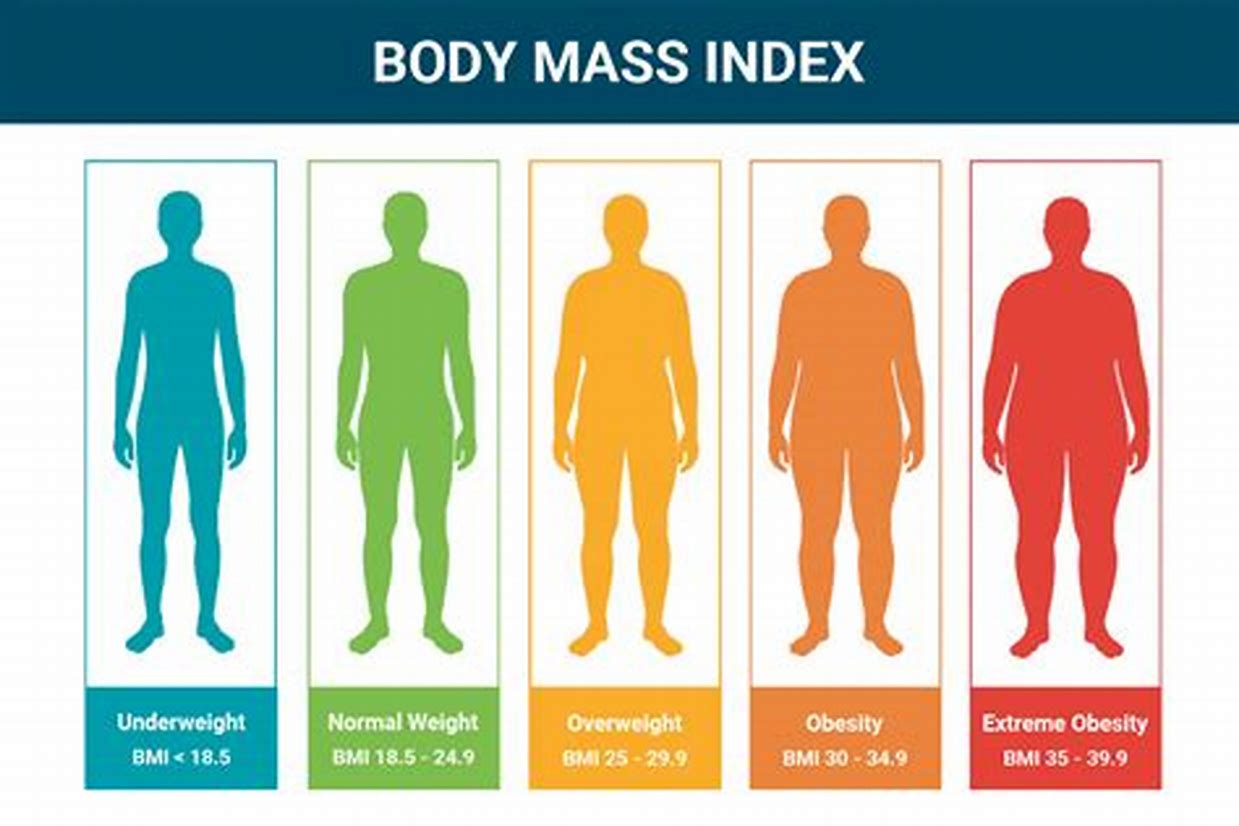
The World Health Organization has established the following standard BMI categories for adults:
| BMI Range | Weight Category |
|---|---|
| Below 18.5 | Underweight |
| 18.5 – 24.9 | Normal (Healthy) Weight |
| 25.0 – 29.9 | Overweight |
| 30.0 – 34.9 | Obesity Class I |
| 35.0 – 39.9 | Obesity Class II |
| 40.0 and above | Obesity Class III (Severe/Morbid Obesity) |
Underweight (BMI below 18.5)
A BMI under 18.5 suggests that a person may be underweight, which can indicate malnutrition, eating disorders, or other underlying health conditions. Being underweight is associated with a weakened immune system, bone loss, fatigue, and fertility issues.
Normal / Healthy Weight (BMI 18.5 – 24.9)
This is the ideal BMI range for most adults. People in this category generally have a lower risk of heart disease, type 2 diabetes, and other weight-related chronic illnesses. However, a normal BMI does not automatically mean optimal health if poor diet or a sedentary lifestyle is present.
Overweight (BMI 25 – 29.9)
An overweight BMI indicates excess body weight relative to height. Individuals in this range face an increased risk of high blood pressure, high cholesterol, sleep apnea, and joint problems. Lifestyle changes such as improved diet and regular physical activity are typically recommended.
Obese (BMI 30 and above)
Obesity is a serious health condition associated with significantly elevated risks of cardiovascular disease, type 2 diabetes, stroke, certain cancers, and premature death. The three obesity classes reflect increasing levels of severity.
BMI Chart for Adults
A BMI chart is a visual reference that maps BMI values against height and weight combinations, allowing people to look up their category without manual calculation. Below is a general overview of BMI across common height/weight combinations:
| Height | Healthy Weight Range | Overweight Range | Obese Range |
|---|---|---|---|
| 5’0″ (152 cm) | 97 – 128 lbs | 128 – 153 lbs | 153 lbs and above |
| 5’4″ (163 cm) | 110 – 144 lbs | 145 – 173 lbs | 174 lbs and above |
| 5’7″ (170 cm) | 121 – 158 lbs | 159 – 190 lbs | 191 lbs and above |
| 5’10” (178 cm) | 132 – 174 lbs | 175 – 208 lbs | 209 lbs and above |
| 6’0″ (183 cm) | 140 – 184 lbs | 185 – 221 lbs | 222 lbs and above |
| 6’2″ (188 cm) | 148 – 194 lbs | 195 – 233 lbs | 234 lbs and above |
Note: These are approximate ranges based on standard BMI calculations.
BMI for Women vs. BMI for Men
One of the most frequently asked questions about BMI is whether the BMI scale is different for men and women. The short answer: the standard BMI formula and categories are the same for both sexes. However, there are important physiological differences to keep in mind.
BMI for Women
Women naturally have a higher percentage of body fat than men at the same BMI. For example, a woman with a BMI of 22 may have approximately 25–30% body fat, which is considered healthy for a female adult. Women also tend to store fat in different areas (hips, thighs, and breasts) compared to men.
Because of these differences, some researchers argue that women may need slightly adjusted BMI thresholds for more accurate health risk prediction.
BMI for Men
Men typically have more lean muscle mass, which weighs more than fat. This means a muscular man may have a BMI in the overweight range without actually having excess body fat. Men are more prone to central obesity (belly fat), which BMI alone does not capture.
For both men and women, complementary measurements like waist circumference, waist-to-hip ratio, and body fat percentage offer a more complete picture of health.
BMI Calculator for Children and Teens
BMI calculation for children and adolescents (ages 2–19) works differently than for adults. While the formula is the same, the interpretation uses age- and sex-specific percentiles from growth charts developed by the CDC.
BMI Percentile Categories for Children
| Percentile Range | Weight Category |
|---|---|
| Below the 5th percentile | Underweight |
| 5th – 84th percentile | Healthy Weight |
| 85th – 94th percentile | Overweight |
| 95th percentile and above | Obese |
This is because children’s body composition changes significantly as they grow, and what is normal for a 6-year-old is very different from what is normal for a 16-year-old. A pediatric BMI calculator or “BMI-for-age calculator” is recommended when assessing weight status in young people.
Parents concerned about their child’s BMI should always consult a pediatrician rather than relying solely on online calculators.
What Is a Healthy BMI Range?
The healthy BMI range for adults is generally defined as 18.5 to 24.9. Staying within this range is associated with:
- Reduced risk of heart disease and stroke
- Lower blood pressure and cholesterol levels
- Better blood sugar regulation and reduced type 2 diabetes risk
- Improved sleep quality
- Greater mobility and reduced joint stress
- Lower risk of certain cancers
However, it is important to recognize that a “healthy” BMI does not guarantee good health, and an “unhealthy” BMI does not automatically mean you have a serious condition. BMI is a screening tool, not a diagnostic tool. A healthcare provider should always interpret BMI results in the context of a full clinical evaluation.
For older adults (65+), some research suggests a slightly higher BMI range (22–27) may be protective against bone density loss and muscle wasting, a condition known as sarcopenia.
For Asian populations, the WHO has noted that health risks such as type 2 diabetes and cardiovascular disease can appear at lower BMI thresholds (as low as 23), and modified BMI categories have been proposed for these populations.
Limitations of BMI
Despite its widespread use, BMI has several well-documented limitations:
1. Does Not Measure Body Fat Directly BMI cannot distinguish between fat mass and lean muscle mass. A highly trained athlete may register as “overweight” or even “obese” due to dense muscle tissue, even though their body fat percentage is low.
2. Ignores Fat Distribution Where you carry fat matters enormously. Visceral fat (around the abdomen and internal organs) is more dangerous than subcutaneous fat (under the skin). BMI provides no information about fat distribution, which is why waist circumference measurements are often recommended alongside BMI.
3. Not Accurate for All Ethnicities As mentioned, people of Asian descent may face health risks at lower BMIs, while people of some African or Caribbean backgrounds may have lower health risks at higher BMIs. A universal BMI threshold may not accurately reflect risk across diverse populations.
4. Varies with Age and Sex Older adults naturally lose muscle mass and may appear at a “normal” BMI while actually having excess fat. Similarly, women naturally carry more fat than men at equivalent BMIs.
5. Does Not Account for Bone Density Individuals with higher bone density may score higher on the BMI scale without any corresponding increase in body fat.
Given these limitations, health professionals increasingly advocate using BMI alongside other measurements such as waist-to-height ratio, DEXA scans, and bioelectrical impedance analysis for a more accurate health assessment.
How to Improve Your BMI
If your BMI falls outside the healthy range, the good news is that sustainable, gradual changes in lifestyle can make a meaningful difference. Here are evidence-based strategies:
For Reducing a High BMI (Overweight or Obese)
1. Adopt a Balanced, Calorie-Conscious Diet Focus on whole foods — vegetables, fruits, lean proteins, legumes, and whole grains. Reduce consumption of ultra-processed foods, added sugars, and refined carbohydrates. A moderate calorie deficit of 500–750 kcal per day can result in safe weight loss of approximately 0.5–1 kg per week.
2. Increase Physical Activity The WHO recommends at least 150–300 minutes of moderate-intensity aerobic activity per week for adults. Incorporating strength training 2–3 times per week helps build muscle mass, which boosts metabolic rate.
3. Prioritize Sleep and Stress Management Poor sleep and chronic stress are strongly linked to weight gain through hormonal disruption (elevated cortisol and ghrelin levels). Aim for 7–9 hours of quality sleep per night.
4. Stay Hydrated Drinking water before meals can reduce calorie intake. Replacing sugary drinks with water is one of the simplest dietary changes with a measurable impact on BMI.
5. Seek Professional Support A registered dietitian, certified personal trainer, or physician specializing in obesity medicine can create a personalized, medically sound plan.
For Improving a Low BMI (Underweight)
1. Increase Caloric Intake Healthily Focus on nutrient-dense, calorie-rich foods such as nuts, seeds, avocados, whole grains, lean meats, and dairy. Aim for a calorie surplus of 300–500 kcal per day.
2. Strength Training Resistance exercises stimulate muscle growth, which helps increase body weight in a healthy, functional way.
3. Rule Out Underlying Causes Being underweight may be a sign of thyroid disorders, gastrointestinal conditions, or eating disorders. Always consult a doctor before making significant dietary changes.
BMI vs. Other Health Metrics
BMI is just one piece of the health puzzle. Here is how it compares to other commonly used health assessments:
| Metric | What It Measures | Advantage Over BMI |
|---|---|---|
| Waist Circumference | Abdominal fat accumulation | Better predictor of metabolic risk |
| Waist-to-Hip Ratio | Fat distribution pattern | Identifies central obesity |
| Body Fat Percentage | Actual proportion of fat in the body | Differentiates fat from muscle |
| DEXA Scan | Bone density, fat, and lean mass | Most accurate body composition analysis |
| Waist-to-Height Ratio | Central obesity relative to height | Useful across all ethnic groups |
| Blood Pressure | Cardiovascular health | Direct disease risk indicator |
| HbA1c / Blood Glucose | Blood sugar regulation | Direct diabetes risk marker |
Health experts increasingly recommend a combination of BMI + waist circumference as the minimum assessment, since this pairing captures both overall and central adiposity.
Frequently Asked Questions About BMI
What is a good BMI number?
A BMI between 18.5 and 24.9 is considered healthy for most adults. However, the ideal range may vary slightly based on age, sex, and ethnicity.
What BMI is considered overweight?
A BMI of 25.0 to 29.9 is classified as overweight by the World Health Organization.
What BMI is obese?
A BMI of 30.0 or higher is classified as obese. Obesity Class III (severe or morbid obesity) begins at a BMI of 40.
How do I calculate my BMI without a calculator?
Use the formula: BMI = Weight (kg) ÷ Height² (m²). For imperial units: BMI = [Weight (lbs) ÷ Height² (inches²)] × 703.
Is BMI accurate for athletes and bodybuilders?
No. Athletes with high muscle mass often have elevated BMIs that falsely suggest overweight or obesity. For athletic populations, body fat percentage is a more reliable measurement.
Can BMI predict health risks?
BMI is a screening tool, not a diagnostic one. While high BMI correlates with elevated health risks, it should be interpreted alongside other clinical measurements and medical history.
Does BMI change with age?
The standard BMI scale is the same for adults of all ages, but body composition changes with age (loss of muscle, increase in fat). Some experts recommend adjusted thresholds for older adults.
Is BMI different for men and women?
The formula and standard categories are the same, but physiological differences — particularly in muscle-to-fat ratios — mean that BMI may not equally reflect health risks across sexes.
What BMI should I aim for to lose weight healthily?
If your BMI is above 25, aiming for the 18.5–24.9 range through gradual, sustainable weight loss (0.5–1 kg/week) is generally recommended.
How often should I check my BMI?
Most health professionals suggest checking your BMI every 3–6 months if you are actively managing weight, or annually as part of a routine health check-up.
Conclusion: Use a BMI Calculator as a Starting Point
A BMI calculator is an invaluable, free, and accessible first step in understanding your weight status and its potential impact on your health. By knowing your BMI, you can identify whether you fall within a healthy weight range and take proactive steps to improve your wellbeing if needed.
That said, BMI is most powerful when used alongside other health metrics and in consultation with a qualified healthcare professional. It does not tell the whole story — but it is an excellent place to start.
Whether your goal is to lose weight, gain weight, or maintain a healthy lifestyle, understanding your body mass index empowers you with the knowledge to make informed decisions about your diet, physical activity, and overall health journey.
Disclaimer: This article is for informational purposes only and does not constitute medical advice. Always consult a qualified healthcare provider before making significant changes to your diet or exercise routine.
Word Count: ~3,000 words
Suggested Tags: BMI calculator, body mass index, healthy weight, BMI chart, BMI formula, calculate BMI online, healthy BMI range, overweight BMI, BMI for women, BMI for men, BMI for children, obesity, weight loss
Suggested Categories: Health & Wellness, Fitness, Weight Management, Nutrition